
THE MAN GOD SEES
Grace, Sin, the Blood of Christ, and the Battle Inside the Phoenix Man
One of the deepest questions a burned man asks is this:
“After everything I’ve done… how does God actually see me?”
Because most midlife men carry hidden wars:
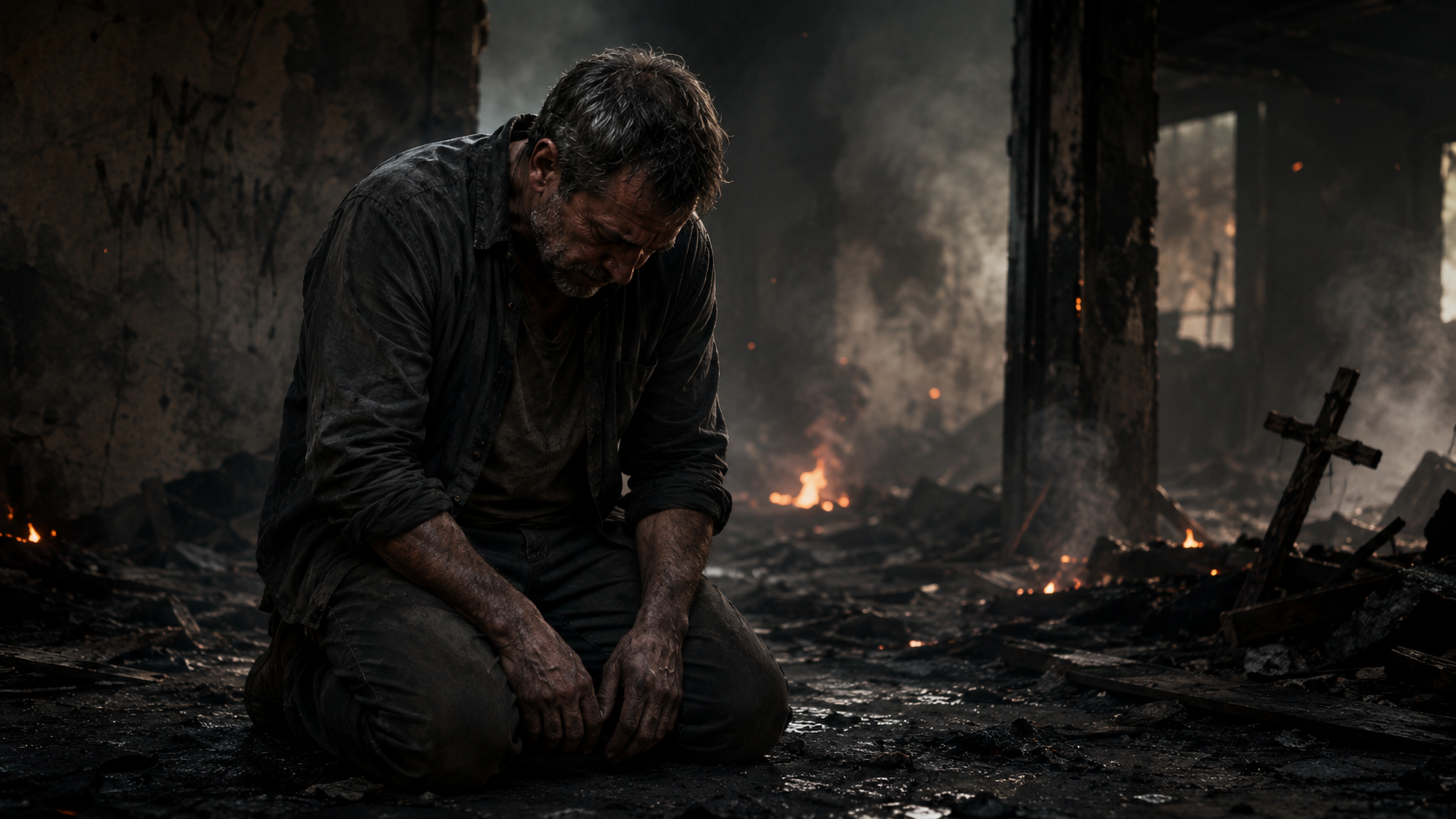
lust
addiction
rage
pride
deceit
selfishness
betrayal
shame
compromise
secret sin
emotional destruction
And after the crash… many men quietly wonder:
“Did I finally become too broken for God?”
MANY MEN LIVE LIKE THEY ARE SPIRITUALLY DISQUALIFIED
That’s the hidden torment.
A man may:
believe in God
pray occasionally
read Scripture
even attend church
…but deep down still believe:
“God tolerates me… but He cannot truly love me after what I’ve become.”
That belief destroys men spiritually.
Because shame convinces a man:
to hide from God
to fake spirituality
to perform religion
to stop pursuing transformation
or to fully surrender to sin because he feels hopeless anyway
But the Gospel tells a far deeper story than that.
“The enemy wants a man drowning in shame.
God wants a man transformed through truth.”
DOES GOD SEE BELIEVERS AS PERFECT THROUGH CHRIST?
This is where theology becomes deeply personal.
Scripture teaches something astonishing:
Through Christ, the believer is:
forgiven
redeemed
justified
reconciled
adopted
covered by grace
Meaning:
God does not look at the faithful believer merely through the record of his failures.
He sees him through the righteousness of Christ.
That does NOT mean:
humans become sinless
mistakes no longer matter
accountability disappears
sin is ignored
God approves of destructive behavior
But it DOES mean:
The faithful man is no longer spiritually condemned every time he stumbles.
That changes everything.
THE PHOENIX MAN MUST UNDERSTAND: THERE IS A DIFFERENCE BETWEEN FALLING… AND LIVING IN REBELLION
This matters.
Because many men misuse grace.
They say:
“God forgives me anyway.”
“Nobody’s perfect.”
“I’m just wired this way.”
“Boys will be boys.”
That is not surrender.
That is justification.
A surrendered man may still battle sin…
but he no longer celebrates the chains destroying him.
The Phoenix Man begins grieving the things that once controlled him.
That grief is often evidence the Spirit is already working inside him.
“Conviction is not proof God abandoned you.
It may be proof He’s still fighting for you.”
THE BLOOD OF CHRIST IS NOT A LICENSE TO STAY BROKEN
This is where many teachings become dangerously shallow.
Grace is not permission to remain enslaved.
Grace is the invitation to become transformed.
The faithful man begins realizing:
lust is destroying him
pride is poisoning him
anger is consuming him
selfishness is isolating him
addiction is mastering him
deception is corrupting him
And eventually he cries:
“God… I don’t want to stay this man anymore.”
That prayer matters deeply.
Because Christianity is not merely about escaping punishment.
It is about rebirth.
“God does not merely forgive the burned man.
He begins rebuilding him.”
WHY DO FAITHFUL MEN STILL STRUGGLE WITH SIN?
Because transformation is often a process.
Many men expect:
instant perfection.
But Scripture repeatedly describes:
spiritual warfare
refinement
sanctification
dying to self daily
renewing the mind
resisting flesh
Even the Apostle Paul described internal struggle.
That means: a faithful man may still wrestle with:
temptation
insecurity
pride
lust
anger
fear
selfishness
The difference is: he no longer wants sin to rule him.
The war itself often proves the man is spiritually awake.
Dead men do not fight chains.
THE PHOENIX MAN MUST STOP DEFINING HIMSELF ONLY BY HIS WORST MOMENTS
Many men build their entire identity around:
divorce
addiction
pornography
infidelity
emotional failures
parenting mistakes
secret shame
sexual sin
cowardice
collapse
And brother… those things matter.
They hurt people.
They leave scars.
They require accountability and repentance.
But they do NOT automatically become your final identity.
Because in Christ: identity is no longer rooted solely in your worst collapse.
It becomes rooted in redemption.
“God knows the man you were.
But He also sees the man you are becoming.”
THE SPIRITUAL DANGER OF SELF-HATRED
Some men think constant self-condemnation equals humility.
It doesn’t.
Sometimes it is disguised pride.
Because the man becomes obsessed with:
his failures
his shame
his darkness
his self-image
instead of surrendering fully to God’s grace and continuing forward in obedience.
The enemy wants men trapped in either:
arrogance
orhopelessness
Both keep the man spiritually stuck.
But the Gospel calls men into:
humility
repentance
responsibility
faithfulness
transformation
perseverance
Not self-destruction.
DOES GOD STILL DISCIPLINE MEN?
Yes.
Because love disciplines.
Scripture teaches that God corrects those He loves.
Not to destroy them.
But to refine them.
Sometimes the crash itself becomes part of that refinement.
Not every hardship is punishment.
But many crashes expose:
idols
deception
pride
false identity
spiritual emptiness
The fire reveals what the man built his life upon.
“The crash may have been the first moment you finally stopped running from yourself… and from God.”
THE PHOENIX MAN IS NOT SAVED BY PERFORMANCE
This truth crushes religious pride.
No man earns salvation through:
toughness
masculinity
church attendance
image management
fake perfection
rule performance
Salvation is rooted in grace through faith.
But genuine faith eventually produces fruit:
humility
integrity
repentance
love
discipline
obedience
spiritual maturity
Not instantly.
But progressively.
WHAT GOD MAY ACTUALLY SEE IN THE BURNED MAN
Not merely:
addiction
failure
collapse
weakness
hypocrisy
scars
But:
a wounded child
a deceived man
a soul trapped in chains
a man desperate for identity
a man trying to survive pain incorrectly
a man capable of redemption
a future rebuilt through surrender
That does not remove responsibility.
But it reveals mercy.
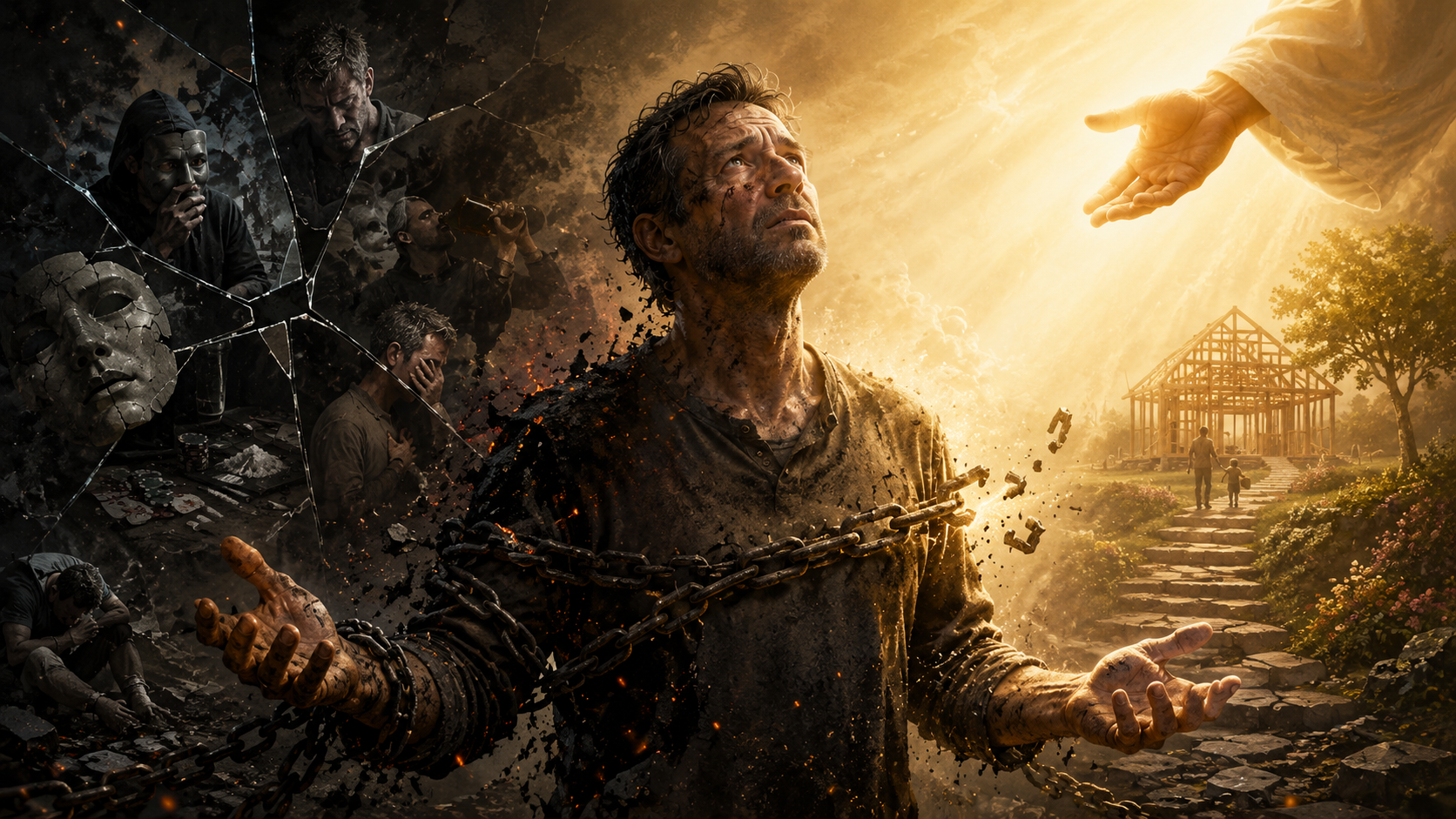
“God is not shocked by your ashes.
He already knew where the fire would lead you.”
THE GOAL IS NOT FAKE PERFECTION
The Phoenix Man must stop chasing:
image perfection
spiritual performance
religious acting
And begin pursuing:
honesty
surrender
repentance
transformation
faithfulness
endurance
Because faithful men still stumble.
But surrendered men keep getting back up.
“The blood of Christ does not pretend you never burned.
It declares the fire does not get the final word.”
WHEN THE MAN FINALLY UNDERSTANDS GRACE
Something changes.
He stops hiding.
Stops performing.
Stops pretending.
Stops believing:
he must save himself
he must appear perfect
he is beyond redemption
And instead he begins walking honestly before God.
Still imperfect.
Still refining.
Still battling flesh.
Still learning discipline.
But no longer spiritually abandoned.
Because the faithful Phoenix Man eventually realizes:
God did not wait for perfection before reaching into the ashes
Grace does not leave you buried beneath your past. It gives you a new foundation from which to rise.
Forgiveness does not end the battle overnight. Learn why the old patterns remain—and how transformation begins.
It never gives him permission to excuse what is destroying him.
GRACE DOES NOT CALL YOU INNOCENT
It declares that Christ answered for the guilty man who places his faith in Him.
God knows what you did.
He knows what you hid.
He knows who was hurt.
He knows every motive, compromise, excuse, and failure.
But for the man who belongs to Christ, those sins no longer stand before God as an unpaid sentence.
The debt was not ignored.
The debt was paid.
Now comes the question every forgiven man must answer:
What will you do with the grace you have received?
Will you use it to excuse the man you have become?
Or will you allow it to rebuild you into a man who increasingly reflects Christ?
SO… DOES GOD “NOT SEE” OUR SINS?
This question requires honesty.
Biblically, God is fully aware of every human action, thought, motive, and hidden place.
Nothing is concealed from Him.
“Nothing in all creation is hidden from God’s sight.”
— Hebrews 4:13The blood of Christ does not make God unaware of sin.
It changes how the sin of the believer is counted before Him.
For the man who is in Christ, sin is no longer held against him as an unpaid, condemning debt.
“There is now no condemnation for those who are in Christ Jesus.”
— Romans 8:1“Blessed is the one whose sin the Lord will never count against them.”
— Romans 4:8The cross does not pretend the sin never happened.
The cross declares that Christ carried it, answered for it, and canceled the debt it created.
“He forgave us all our sins, having canceled the charge of our legal indebtedness.”
— Colossians 2:13–14God sees the sin.
God sees the damage.
God sees the motive.
But for the believer, He also sees the finished work of Christ.
The debt was not overlooked.
The debt was paid.
That is grace.
And grace does not give the Phoenix Man permission to remain in sin.
Grace gives him the freedom, power, and responsibility to rise from it.
Scripture: Nothing Is Hidden from God
Scripture: Nothing Is Hidden from God
Hebrews 4:13
“Nothing in all creation is hidden from God’s sight.”
Brother, God sees the action, the motive, the thought, and the hidden place.
Psalm 139:1–4
David declares that God knows when he sits, rises, thinks, travels, and speaks—even before the words leave his mouth.
Jeremiah 17:10
“I the Lord search the heart and examine the mind.”
God does not evaluate only outward behavior. He sees what is happening inside the man.
1 Corinthians 4:5
Paul teaches that the Lord will expose what is hidden and reveal the motives of the heart.
Ecclesiastes 12:14
“God will bring every deed into judgment, including every hidden thing.”
Brother, the statement is sound:
God is fully aware of every action, thought, motive, and hidden place. Nothing is hidden from Him.
Scripture: The Believer Is No Longer Condemned
Romans 8:1
“There is now no condemnation for those who are in Christ Jesus.”
It does not say there is no remaining struggle, temptation, failure, correction, or consequence.
It says there is no condemnation for the man who belongs to Christ.
John 5:24
Jesus says that the believer has eternal life and has crossed over from death to life rather than remaining under judgment.
Romans 5:1
“Since we have been justified through faith, we have peace with God through our Lord Jesus Christ.”
Brother, justification means the believer is declared righteous before God—not because the man lived perfectly, but because Christ’s righteousness is credited to him.
Romans 4:7–8
Paul describes the blessed man whose sins are forgiven and whose sin the Lord does not count against him.
This directly supports this sentence, Brother:
Sin is no longer counted against him in the same condemning way.
Scripture: Christ Paid the Debt
Colossians 2:13–14
Paul says God forgave our sins and canceled the record of debt that stood against us, taking it away through the cross.
The cross did not claim there was no debt.
The cross canceled the debt by paying it.
1 Peter 2:24
“He himself bore our sins in his body on the cross.”
Christ did not ignore sin.
He carried it.
Isaiah 53:5–6
The suffering Servant was wounded for our transgressions, and the Lord placed upon Him the iniquity of us all.
2 Corinthians 5:21
“God made him who had no sin to be sin for us, so that in him we might become the righteousness of God.”
This is the great exchange:
Our sin placed upon Christ
Christ’s righteousness credited to us
Galatians 3:13
“Christ redeemed us from the curse of the law by becoming a curse for us.”
1 Peter 3:18
“Christ also suffered once for sins, the righteous for the unrighteous, to bring you to God.”
Scripture: Christ’s Sacrifice Was Sufficient
Hebrews 10:14
“By one sacrifice he has made perfect forever those who are being made holy.”
This verse is especially important because it holds two truths together:
Made perfect forever — the believer’s settled standing in Christ
Being made holy — the believer’s continuing transformation
The man is justified completely, yet still being sanctified progressively.
That is why a Christian may be accepted by God while still battling remaining sin.
Hebrews 10:17–18
God promises to remember their sins and lawless acts no more, and where forgiveness has occurred, no further sacrifice for sin is needed.
“Remember no more” does not mean God loses knowledge.
It means He no longer holds that sin against the believer as an unpaid charge.
Hebrews 9:12
Christ entered once for all and obtained eternal redemption.
Scripture: Grace Does Not Excuse Continued Rebellion
This balance is essential to the Phoenix System.
Romans 6:1–2
Paul asks whether believers should continue sinning so grace may increase.
His answer:
“By no means.”
Grace removes condemnation, but it does not give permission to make peace with sin.
Romans 6:12–14
Believers are commanded not to let sin reign in their bodies, because sin is no longer their master.
Titus 2:11–12
Grace does more than forgive.
Grace teaches believers to reject ungodliness and live disciplined, upright, godly lives.
1 John 1:8–9
John acknowledges that believers still sin, but teaches that when they confess, God faithfully forgives and cleanses them.
1 John 2:1–2
John says believers should not sin—but if they do, they have an advocate with the Father: Jesus Christ, the righteous One.
That is the proper biblical balance:
Do not excuse sin.
Do not deny sin.
Do not remain crushed beneath forgiven sin.
Bring it to Christ.